
Are you ready to unravel the enigma of auto insurance costs in Massachusetts? Whether you’re a long-time resident or a newcomer to the Bay State, understanding the factors that influence your insurance premiums can empower you with the knowledge needed to make informed decisions. Let’s dive into the world of auto insurance and uncover what really impacts your rates!
With a myriad of factors at play, from location and vehicle type to driving history, Massachusetts auto insurance is anything but one-size-fits-all. Join us on this journey as we explore the intricacies of insurance rates and provide you with the tools to navigate the auto insurance landscape with ease and confidence.
Factors Influencing Auto Insurance Rates in Massachusetts
Understanding the factors that contribute to auto insurance rates in Massachusetts can help you make informed decisions and potentially save money. These rates are influenced by a variety of factors, each playing a crucial role in determining your final premium.
Let’s dive into the specifics of how different elements such as your location, the type, and age of your vehicle, and other critical factors shape the cost of your auto insurance in the Bay State.
The Impact of Location within Massachusetts
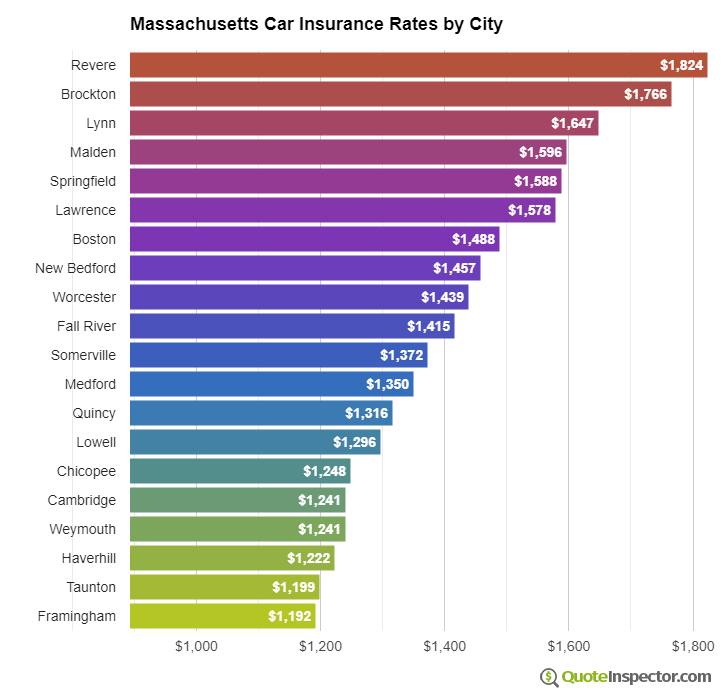
Where you live in Massachusetts significantly affects your auto insurance rates. Urban areas such as Boston, with their higher traffic density and crime rates, often lead to higher premiums compared to rural regions. Insurers calculate these risks based on statistical data, meaning:
- Boston: Higher rates due to increased traffic congestion and theft rates.
- Worcester: Moderate rates, balancing urban living with less congestion than Boston.
- Springfield: Competitive rates, considering its population density and accident statistics.
As a rule of thumb, the more populated and busy your area, the more you might expect to pay for auto insurance.
The Role of Vehicle Type and Age
The kind of vehicle you drive and its age can dramatically influence your insurance premiums. Insurers evaluate the repair costs, safety features, and likelihood of theft associated with your vehicle. Here’s a closer look:
| Vehicle Type | Insurance Impact |
|---|---|
| Sports Cars | Higher premiums due to increased risk of accidents and higher repair costs. |
| SUVs | Generally moderate, though larger models might have higher rates due to potential damage they could cause in an accident. |
| Older Vehicles | Often lower premiums, but this depends on the availability of parts and repair costs. |
It’s essential to consider these factors when purchasing a vehicle, as they have long-term implications on your insurance costs.
Insurers assess risk based on where you live, the car you drive, and various personal factors, tailoring premiums to match your profile and history.
Comparison of Auto Insurance Providers in Massachusetts
In the bustling state of Massachusetts, auto insurance isn’t just a requirement but an essential shield against unforeseen mishaps on the road. With a myriad of options available, choosing the right provider can feel like navigating a maze. We’ve curated an insightful comparison to help you make an informed choice.
Dive into the details as we stack up top auto insurance providers side by side, illuminating coverage options, customer satisfaction, and pricing. This comparison will serve as your compass in the world of auto insurance, pointing you towards the policy that best fits your needs.
| Provider | Coverage Options | Customer Service Ratings | Average Cost |
|---|---|---|---|
| Geico | Comprehensive, Collision, Personal Injury Protection | 4.5/5 | $1,100/year |
| Liberty Mutual | Liability, Roadside Assistance, Rental Reimbursement | 4.2/5 | $1,250/year |
| Progressive | Uninsured Motorist, Medical Payments, Gap Coverage | 4.3/5 | $1,180/year |
| State Farm | Comprehensive, Collision, Rideshare Coverage | 4.4/5 | $1,200/year |
| Safety Insurance | Liability, Physical Damage, Personal Injury Protection | 4.1/5 | $1,300/year |
Pros and Cons of Choosing National vs. Local Insurance Companies in Massachusetts
Choosing between national giants and local insurance companies is a significant decision for any Massachusetts driver. Each option offers unique advantages and potential drawbacks. Let’s weigh these options to understand which might align best with your expectations.
- National Insurance Companies:
- Pros: Typically offer extensive coverage options, high-tech features like mobile apps,
and often have a solid financial stability
.
- Cons: Can lack the personal touch and may offer less flexibility in policy customization.
- Pros: Typically offer extensive coverage options, high-tech features like mobile apps,
- Local Insurance Companies:
- Pros: Often provide personalized service, better understand local regulations, and can be more flexible with policy terms.
- Cons: Might offer limited coverage options and not always the most competitive pricing.
Ultimately, the choice between national and local providers should align with your personal preferences and priorities, whether it’s comprehensive coverage, personalized service, or cost-effectiveness.
Typical Costs of Auto Insurance in Massachusetts
When it comes to auto insurance costs, Massachusetts stands out for its unique blend of urban hustle and scenic roadways. But how much does it really cost to insure a car in the Bay State? Let’s delve into the typical cost ranges.
Auto insurance premiums in Massachusetts can vary significantly. Factors such as your age, driving experience, and the level of coverage you choose all play crucial roles. Here’s what you can generally expect to pay.
Cost Differences Across Demographic Groups
The premiums you face can heavily depend on your demographic profile. Younger drivers, especially those under 25, often face higher insurance rates due to perceived risk. In contrast, experienced drivers with a clean record might enjoy lower premiums. Here’s a quick look at how some demographics can affect your rate:
- Teen Drivers (16-19): Usually face the highest premiums, often over $3,000 annually.
- Young Adults (20-24): Rates tend to drop but remain high, typically between $2,000 and $2,500.
- Middle-Aged Drivers (25-50): Generally enjoy more reasonable rates, ranging from $1,200 to $1,800.
- Seniors (65+): Some insurers offer discounts, but rates can vary widely depending on health factors.
Additionally, driving experience can make a substantial difference. A new driver, regardless of age, might see higher rates compared to someone with decades of accident-free driving. Nonetheless, shopping around and maintaining a clean driving record can help lower these costs over time.
Average Rates Based on Coverage Levels
Auto insurance policies in Massachusetts can be tailored to meet different needs, from basic liability coverage to comprehensive protection. Here’s a snapshot of typical insurance rates based on the level of coverage you might choose:
| Coverage Level | Average Annual Rate |
|---|---|
| Minimum Liability | $700 – $1,200 |
| Standard Coverage (liability + collision) | $1,200 – $1,800 |
| Full Coverage (comprehensive) | $1,500 – $2,500 |
As you can see, the rates can swing considerably depending on how much protection you desire. For those looking for the best value, it’s crucial to balance the need for security with the premium costs. Remember, the cheapest policy is not always the best. Shopping wisely and understanding your specific needs can help you find an optimal plan.
Discounts and Savings on Auto Insurance in Massachusetts
Finding ways to save on auto insurance is a priority for many Massachusetts drivers. Fortunately, there are numerous discounts and strategies available to help reduce your premium costs while maintaining comprehensive coverage.
By understanding common discounts and implementing smart strategies, you can effectively lower your auto insurance expenses without compromising on protection.
Common Discounts for Massachusetts Drivers
Insurance companies offer a variety of discounts that can significantly lower your auto insurance premiums. Massachusetts drivers can take advantage of these common discounts:
- Safe Driver Discount: If you have a clean driving record with no accidents or violations over a certain period, you may qualify for a safe driver discount.
- Multi-Policy Discount: Bundling your auto insurance with other types of insurance, such as homeowners or renters insurance, can lead to substantial savings.
- Good Student Discount: Young drivers who maintain a high GPA can often receive a discount, rewarding their diligence both in and out of school.
- Low Mileage Discount: If you drive less than the average number of miles per year, you may be eligible for a low mileage discount.
- Anti-Theft Device Discount: Installing approved anti-theft devices in your vehicle can help reduce the risk of theft and lower your insurance rates.
Strategies for Maximizing Savings
Reducing your auto insurance costs requires a proactive approach. Below are strategies that can help you maximize savings:
- Shop Around: Comparing quotes from multiple insurance providers can reveal the best rates and discounts available.
- Review Coverage: Regularly review your coverage to ensure that you aren’t over-insured. Adjust your coverage to meet your current needs.
- Increase Deductibles: Opting for a higher deductible can lower your premium costs, but ensure you have sufficient funds to cover the deductible in the event of a claim.
- Maintain a Good Credit Score: A strong credit score can positively impact your insurance rates, as many insurers consider it when determining premiums.
- Take Defensive Driving Courses: Completing an approved defensive driving course can not only improve your driving skills but also potentially reduce your insurance costs.
“The secret of getting ahead is getting started.” – Mark Twain
By leveraging these discounts and strategies, Massachusetts drivers can effectively cut down on their auto insurance expenses, ensuring that they get the best deal possible.
Legal Requirements for Auto Insurance in Massachusetts
Driving in Massachusetts comes with the responsibility of being adequately insured to ensure safety and compliance with state laws. Massachusetts mandates specific auto insurance requirements to protect all road users.
Understanding these legal requirements not only helps you stay compliant but also keeps you financially secure in the event of an accident. In Massachusetts, drivers must carry a minimum level of auto insurance, yet there are also optional coverages that can enhance your protection on the roads.
Minimum Insurance Coverage Mandated by Massachusetts Law
Massachusetts auto insurance laws require drivers to have certain coverages to legally operate a vehicle. These requirements are designed to provide financial protection for drivers, passengers, and pedestrians.
- Bodily Injury to Others: Every driver must have at least $20,000 per person and $40,000 per accident for bodily injury liability.
- Personal Injury Protection (PIP): A minimum of $8,000 coverage is required to cover medical expenses, regardless of fault.
- Bodily Injury Caused by Uninsured Auto: Drivers need $20,000 per person and $40,000 per accident for injuries caused by an uninsured driver.
- Damage to Someone Else’s Property: A minimum of $5,000 is necessary for property damage liability.
Optional Coverage Types for Enhanced Protection
While the state’s minimum requirements provide basic protection, many drivers opt for additional coverage options to safeguard themselves against greater risks. These optional coverages can offer peace of mind and financial stability in more severe incidents.
- Comprehensive Coverage: Covers damages to your vehicle not involving a collision, such as theft, fire, or natural disasters.
- Collision Coverage: Pays for damages to your car resulting from a collision, regardless of who was at fault.
- Medical Payments: Offers coverage for medical expenses beyond the PIP limits.
- Rental Reimbursement: Covers the cost of renting a vehicle while yours is being repaired after an accident.
- Roadside Assistance: Provides services such as towing, tire change, and jump-starts during emergencies.
Impact of Driving Record on Insurance Costs in Massachusetts
In the bustling roads of Massachusetts, your driving record is more than just a history of your journeys—it’s a critical factor in determining your auto insurance costs. Insurers scrutinize this record to assess risk, directly influencing your premium rates.
Every ticket, accident, or violation you accumulate can significantly impact the cost of your insurance. Even a single infraction can lead to a hike in your premium, while a clean record can make you eligible for substantial discounts.
Improving Your Driving Record for Better Rates
To improve your driving record and achieve lower rates, consider the following strategies:
- Enroll in defensive driving courses to not only enhance your skills but also potentially qualify for insurance discounts.
- Stay vigilant and adhere strictly to traffic laws to avoid violations that can accumulate and tarnish your record.
- Regularly review your driving record for accuracy and address any discrepancies that may unfairly impact your insurance premiums.
Case Study: A Massachusetts driver saw a 25% reduction in their insurance premiums after three years of maintaining a clean driving record post a minor accident. This highlights the potential savings achievable with concerted effort and a commitment to safe driving.
By focusing on maintaining a pristine driving record, you not only reduce your insurance costs but also contribute to safer roads in Massachusetts, benefiting all drivers.
Last Word
In the dynamic landscape of Massachusetts auto insurance, knowledge truly is power. By comprehending the multifaceted elements that affect your premiums, you not only stand to save money but also enjoy peace of mind on the road. Embrace the opportunity to maximize your savings and ensure you’re adequately covered. Remember, a well-informed driver is a savvy driver!

